
When I brought home my first puppy a chunky little Labrador named Biscuit. I genuinely had no clue how much to feed him. I just… guessed. Filled his bowl twice a day and called it a day. By week three, our vet looked at him and said, “He’s a little on the heavy side for eight weeks.” Classic first-time puppy parent mistake.
Since then, I’ve raised three dogs and fostered a handful of puppies through a local rescue. And the number one question I get from new puppy owners is always the same: “How much should I feed my puppy, and how often?” So let me break it all down the way I wish someone had done for me.
Quick heads up
Every puppy is different — breed size matters a lot here. A Chihuahua puppy and a Great Dane puppy have very different caloric needs. I’ll cover all of it below, but always check with your vet too. They know your specific pup.
How Much Should You Feed a Puppy?
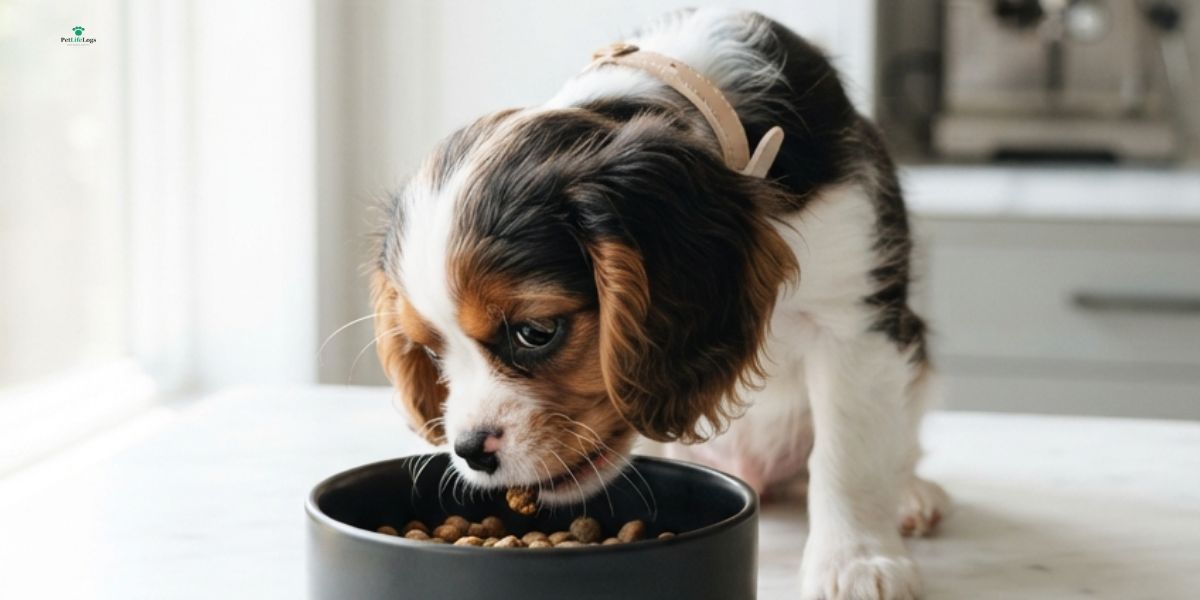
Here’s the honest answer: it depends on their age, weight, and breed size. There’s no universal scoop amount that works for every dog. What you need to do first is flip over your puppy food bag and find the feeding guidelines on the back. Most good brands give you a chart by weight.
But here’s what the bag doesn’t tell you — those amounts are usually for the entire day, not each meal. I learned this the hard way when a foster pup I had (a beagle mix named Pretzel) was getting double what he needed because I thought the “daily amount” was per feeding. He was round as a little barrel by week two.
A general starting point most vets and resources like the American Kennel Club recommend:
General daily amounts by breed size
Small breeds (under 20 lbs adult weight): ¼ to ¾ cup per day
Medium breeds (20–50 lbs adult weight): ¾ to 2 cups per day
Large breeds (50+ lbs adult weight): 2 to 4 cups per day
Divide those amounts across multiple meals throughout the day — not all at once. Young puppies can’t handle a big meal. Their tiny stomachs just aren’t built for it yet.
Puppy Feeding Schedule By Age
This is the section you probably came here for. Let me walk you through exactly what a realistic feeding schedule looks like at each stage — and what mistakes are easy to make along the way.
| Age | Meals Per Day | Amount Per Day | Food Type |
| 3–4 weeks | 4–5 (+ mom’s milk) | Small amounts — softened kibble or puppy mush | Wet or moistened dry |
| 8–12 weeks | 4 meals | Per bag guidelines ÷ 4 | Puppy-formulated dry or wet |
| 3–6 months | 3 meals | Per bag guidelines ÷ 3 | Puppy-formulated dry |
| 6–12 months | 2 meals | Per bag guidelines ÷ 2 | Puppy food (large breeds switch earlier) |
| 12+ months | 2 meals | Per adult food bag guidelines | Adult dog food |
8 to 12 Weeks — Four Meals a Day (Yes, Really)
I know four meals a day sounds like a lot. But at this age, puppies have tiny stomachs and blood sugar that can drop quickly if they go too long without eating. Think of it like feeding a toddler — frequent, small meals keep their energy stable.
Try to space these out roughly evenly. Something like 7am, 12pm, 5pm, and 9pm works great. Consistency is your friend here — it also helps with potty training because puppies usually need to go outside about 15–20 minutes after eating.
Mistake I made
I used to skip the late-night meal with Biscuit because I was tired. He started waking up at 3am restless and whiny. Turns out he was just hungry. Don’t skip that last meal — at least until 12 weeks.
3 to 6 Months — Dropping to Three Meals
Around the 3-month mark you can start shifting to three meals a day. Your puppy’s stomach is bigger now, they can go longer between meals, and honestly — three times a day is a much more manageable schedule for most families.
A good rhythm here is morning (7–8am), midday (12–1pm), and evening (5–6pm). If you’re at work all day, the midday feeding is the tough one. A lot of people use a pet sitter, doggy daycare, or even a timed automatic feeder for the noon meal. I’ve used the Chewy.com automatic feeder for this and it’s been a lifesaver during busy weeks.
During this stage, you’ll also notice your puppy starting to look less roly-poly and more like an actual dog. Don’t panic — this is normal. Their metabolism is picking up.
6 to 12 Months — Moving to Two Meals
This is the transition most people are comfortable with because it matches our own eating schedule — morning and evening. Two meals a day is what most adult dogs stick to for life, so getting your puppy used to this rhythm now is a good move.
One thing worth knowing: large and giant breed puppies (think German Shepherds, Labradors, Great Danes) often benefit from staying on puppy food longer — sometimes up to 18 months — because their bones are still developing. Smaller breeds can often switch to adult food closer to 12 months.
Wondering when to make the switch?
We have a full guide on when to stop feeding puppy food and switch to adult dog food — including signs your pup is ready and how to transition without stomach upset. Worth reading before you make the change.
Editor’s pick
Purina Pro Plan Puppy Food
This is genuinely what I fed Biscuit and all my fosters. High protein, no fillers, and the feeding chart on the bag is actually accurate and easy to follow. It’s a vet-recommended brand for a reason.
Purina Pro Plan Puppy Feeding Chart
Since a lot of people use Purina Pro Plan (and honestly, it’s a solid choice), here’s how their feeding chart generally breaks down. This is based on their published guidelines — always cross-check with the actual bag since formulas can vary slightly between varieties.
| Adult Weight (expected) | 8–12 weeks | 3–4 months | 5–7 months | 8–12 months |
| 5 lbs (toy breeds) | ½ cup/day | ½ cup/day | ⅓ cup/day | ⅓ cup/day |
| 10 lbs (small) | ¾ cup/day | ¾ cup/day | ⅔ cup/day | ⅔ cup/day |
| 20 lbs (small-medium) | 1¼ cups/day | 1¼ cups/day | 1 cup/day | 1 cup/day |
| 40 lbs (medium) | 1¾ cups/day | 2 cups/day | 1¾ cups/day | 1½ cups/day |
| 60 lbs (medium-large) | 2¼ cups/day | 2¾ cups/day | 2½ cups/day | 2¼ cups/day |
| 80+ lbs (large) | 3 cups/day | 4 cups/day | 3½ cups/day | 3 cups/day |
Notice how the amounts actually go down as they get older? That surprised me the first time I saw it. Younger puppies need more calories per pound of body weight because they’re growing so fast. By the time they’re 8–12 months, growth is slowing and they need a little less.
How to Build a Feeding Routine That Actually Sticks
Routines are everything with puppies. A consistent schedule doesn’t just help with feeding — it’s the foundation of good behavior, potty training, and sleep habits. Here’s what has actually worked for me:
Step 1
Feed at the same times every day
Pick your meal times and stick to them — even on weekends. Your puppy’s internal clock is surprisingly accurate. After a week, they’ll be sitting by their bowl five minutes before mealtime without you saying a word. It’s honestly kind of adorable.
Step 2
Put the bowl down, give them 15 minutes, then pick it up
Free-feeding (leaving food out all day) sounds kind and convenient, but it backfires. Your puppy won’t learn that food is a scheduled thing, they’ll graze all day, and you lose your main potty-training tool. Set the bowl down, let them eat, and pick it up — whether they finished or not.
Step 3
Go outside immediately after eating
The “puppy gastrocolic reflex” is very real — food goes in, and within 15–20 minutes their body is ready to eliminate. Take them outside right after every meal. This is how potty training happens faster than you’d expect.
Step 4
Keep their feeding spot calm and consistent
Don’t feed them in the middle of the busy kitchen while kids are running around. Puppies eat better when it’s calm. Same spot, same bowl, same routine. This also helps if you ever have a picky eater — the routine tells their brain “this is eating time.”
Step 5
Track how much they’re eating week to week
As your puppy grows, their portions change. Set a reminder on your phone to revisit the feeding chart every 4 weeks. A quick weigh-in on your bathroom scale (weigh yourself, then yourself holding the puppy, subtract) keeps you on track. The Purina website has a great interactive feeding calculator if you want something precise.
“The routine doesn’t just feed your puppy — it teaches them how to trust you. And that’s worth more than any fancy food brand.”
Signs You’re Feeding Too Much (or Too Little)
Here’s the truth: the numbers on a chart are a starting point, not the final word. Every puppy is different. One of mine — a Border Collie mix named Hazel — needed 20% more than the chart said because she was just naturally more active. Another foster needed less. Learning to read your dog matters more than memorizing any chart.
Signs you might be overfeeding
You can’t easily feel their ribs when you run your hands along their sides. They’re getting soft and rounder, especially around the belly. They leave food consistently — which can mean portions are too big or meals are too frequent. Check in with your vet if you’re unsure — body condition scoring is something they do quickly at any checkup.
Signs you might be underfeeding
Ribs that are very visible or easy to feel without pressing. Your puppy finishes their food in seconds and immediately looks around for more. They seem lethargic or less playful than usual. They’re losing weight rather than gaining steadily. Again — vet check is your best call here.
Pro tip from my vet
Dr. Patel at our local clinic told me: “If you can feel the ribs but not see them, and there’s a slight waist when you look from above — that’s the sweet spot.” It’s called a body condition score of 4–5 out of 9. Aim for that range.
What About Wet Food and Bottle Feeding?
If you’re caring for a very young puppy — we’re talking 3 weeks old or younger — things look very different. At that age, they need their mother’s milk or a puppy milk replacer. Cow’s milk is a hard no — puppies can’t digest it properly and it causes digestive upset fast.
If you’re bottle feeding orphaned puppies, ASPCA has a detailed guide on how to do it properly — the angle, the formula, the frequency. Please read it carefully. It saved a litter of kittens I was fostering last spring, and their puppy guidance is equally thorough.
Around 3–4 weeks you can start introducing “puppy mush” — moistened puppy kibble blended to a porridge consistency. They’ll mostly play in it at first, which is hilarious and extremely messy. That’s fine. By week five or six, most are eating actual wet or soft kibble without needing it moistened.
Questions I Get Asked All the Time